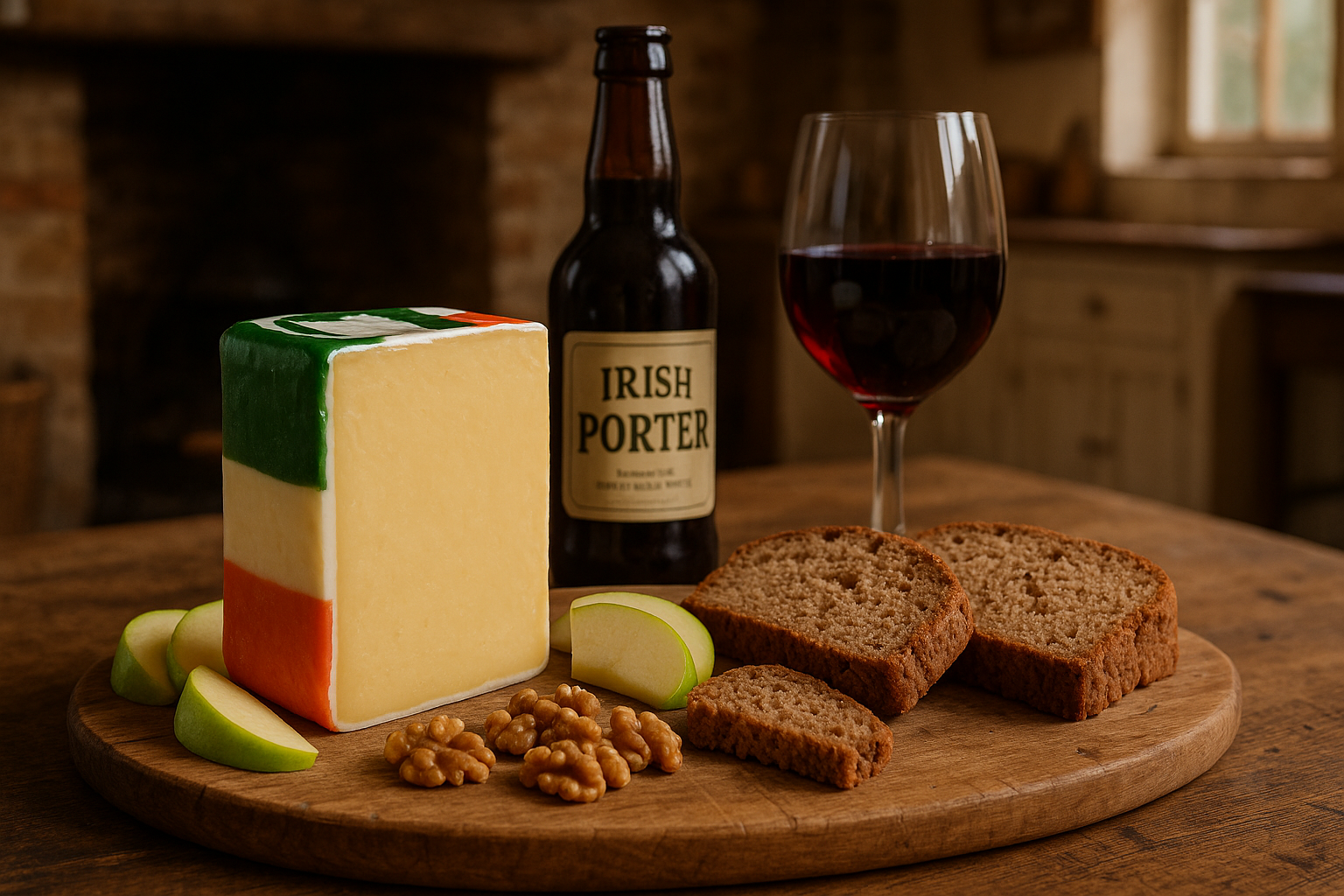
The Golden Vale's Gift: Claddagh-Bo Aged Irish Cheddar
Discover how Ireland's limestone-rich pastures and 12-month aging create a cheddar that's both scientifically fascinating and deliciously complex.
Estimated Reading Time: 6 min
Imagine biting into a piece of cheese that captures the essence of Ireland's Golden Vale in every creamy, crystalline morsel. Claddagh-Bo Aged Irish Cheddar isn't just another cheese on the shelf, it's a testament to how geography, science, and tradition can create something truly extraordinary. Produced by the O'Doherty family at the Old Irish Creamery in County Limerick, this cheese represents the perfect marriage of Irish farmhouse tradition and modern dairy science. Whether you're exploring the original aged variety or the whiskey and porter-infused versions, each wheel tells the story of limestone bedrock, grass-fed cows, and the patient art of 12-month maturation.

The Terroir of the Golden Vale
The secret to Claddagh-Bo's exceptional quality lies beneath your feet, literally. The Golden Vale, spanning across Limerick, Tipperary, and Cork, sits atop carboniferous limestone bedrock that acts like nature's own mineral supplement for the soil. This geological foundation creates the perfect pH balance for perennial ryegrass, the primary diet of the region's Holstein-Friesian herds.
The maritime climate, influenced by the North Atlantic Drift, provides over 1,000mm of annual rainfall and mild temperatures that rarely freeze. This creates an exceptionally long grazing season, up to 300 days a year, allowing cows to feast on fresh pasture for most of the year. The result? Milk that's naturally rich in β-carotene, giving the cheese its signature golden hue without artificial coloring.
Pro Pairing Tip
Look for the natural yellow color in your Claddagh-Bo, it's a visual indicator of the grass-fed milk's quality and the cheese's authentic Irish origin.
From Pasture to Paste: The Science of Cheddaring
Claddagh-Bo begins with pasteurized cow's milk, heated to 72°C for 15 seconds using the High-Temperature Short-Time (HTST) process. This pasteurization serves multiple purposes: it eliminates pathogens, provides a clean slate for starter cultures, and slightly increases the moisture-holding capacity that contributes to the cheese's creamy texture.

The cheesemaking process follows traditional cheddar methods, using vegetarian-friendly microbial rennet derived from fungi like Rhizomucor miehei. This rennet choice is crucial for the global market while ensuring the 12-month aging process develops savory, nutty flavors rather than bitter notes.
Ingredients:
- Pasteurized cow's milk (grass-fed)
- Microbial rennet (vegetarian)
- Salt
- Starter cultures
- For flavored varieties: Irish whiskey or porter beer
The 12-Month Journey
The magic happens during the year-long maturation process, which unfolds in distinct biochemical stages:
Months 0-2: Glycolysis converts residual lactose to lactic acid, developing the cheese's characteristic tang.
Months 2-8: Primary proteolysis breaks down large casein proteins into smaller peptides and amino acids, creating those coveted umami flavors.
Months 8-11: Secondary proteolysis and lipolysis develop the nutty, savory, and sweet notes that define aged cheddar.
Months 11-12: Calcium lactate crystallization creates those delightful crunchy white specks that cheese lovers prize.
The final product contains 36-39% moisture, classifying it as a semi-hard cheese with approximately 54% fat-on-dry-basis, placing it firmly in the premium category.
Terroir Tales
The O'Doherty family has been crafting cheese in Effin, County Limerick, using traditional pressing methods rather than modern extrusion techniques. This hands-on approach preserves the authentic cheddar texture that makes Claddagh-Bo stand out from mass-produced alternatives.
Flavor Profiles: Original and Beyond
Original Aged Cheddar: Expect buttery depth with natural sweetness, balanced by a sharp tang and lingering caramel finish. The grass-fed milk contributes lactones that add creamy, almost coconut-like undertones.
Irish Whiskey Cheddar: Single malt Irish whiskey adds malty warmth and a gentle boozy note. The alcohol acts as a solvent, extracting fat-soluble flavors for a more intense aromatic experience.
Irish Porter Cheddar: Handcrafted with plain Irish porter, this variety offers toasted malt notes and savory depth. The porter's slight bitterness creates a beautiful contrast with the sweet creaminess of the curd.
Texture: Firm Yet Creamy
Claddagh-Bo achieves that perfect balance of firmness and creaminess through careful pH management during the cheddaring process. The final pH of 5.1-5.2 ensures calcium remains bound to casein micelles, creating a structure that's pliable rather than brittle.
Those white crystals you'll notice aren't a flaw, they're calcium lactate crystals, a hallmark of proper 12-month aging. These provide a delightful crunchy contrast to the smooth paste and indicate quality maturation.
Recognizing Quality vs. Spoilage
As an aged cheese, Claddagh-Bo may exhibit characteristics that could be mistaken for spoilage:
Normal characteristics:
- White calcium lactate or tyrosine crystals
- Pungent "foot-like" aroma when warmed
- Slight "sweating" under the wax in warm conditions
Actual spoilage (discard immediately):
- Strong ammonia smell
- Pink, red, or bright orange mold
- Bulging or "blown" appearance
- Slimy surface after wax removal
- Intensely bitter or soapy taste
Perfect Pairings
Wine: Zinfandel's fruit intensity and moderate tannins complement the cheese's sharpness perfectly. For the whiskey variant, try a Tempranillo Reserva, the oak-aged characteristics mirror the cheese's savory notes.
Beer: Irish porter or stout creates a bridge pairing with the porter variant, while Irish red ale's caramel malts complement the aged cheddar's sweetness.
Food: Sliced Granny Smith apples provide acidic contrast, toasted walnuts enhance the nutty profile, and Irish brown bread serves as the perfect robust base.
Pro Pairing Tip
For an elevated cheese board, pair the whiskey-infused variety with onion jam or dark honey, the sweetness balances the alcohol's intensity while highlighting the cheese's complexity.
Cultural Significance and Symbolism
The name "Claddagh-Bo" combines the iconic Irish Claddagh symbol (representing friendship, love, and loyalty) with "Bó," the Gaelic word for cow. Pronounced "KLAD-uh BOH," it literally translates to "The Cow of Love and Friendship."
The traditional tricolor wax coating, green, white, and orange representing the Irish flag, makes these 5-pound wheels a centerpiece for St. Patrick's Day celebrations worldwide. This attention to cultural detail, combined with Somerdale International's global distribution network, brings authentic Irish tradition to cheese lovers everywhere.
Where to Find It
Pagosa Springs residents and visitors can find Claddagh-Bo varieties at Murray's Cheese inside City Market, where the knowledgeable staff can help you select the perfect wheel for your needs.
The Future of Irish Farmhouse Cheddar
Claddagh-Bo represents more than just exceptional cheese, it's a model for how traditional Irish cheesemaking can thrive in the global marketplace. By combining the unique terroir of the Golden Vale with scientific precision and cultural authenticity, the O'Doherty family has created a product that honors the past while embracing the future.
Whether you're a cheese novice or a seasoned fromager, Claddagh-Bo offers a delicious education in how geography, science, and tradition can create something truly special. Each bite connects you to the limestone-rich pastures of County Limerick and the centuries-old tradition of Irish cheesemaking.
Sources and Further Reading
- Bord Bia (Irish Food Board) - Farmhouse Cheese Profiles
- Somerdale International - Official Product Information
- University of Wisconsin Center for Dairy Research - Cheesemaking Principles
- USDA Agricultural Marketing Service - Cheese Grades and Standards
- Culture Magazine - Irish Cheese Features