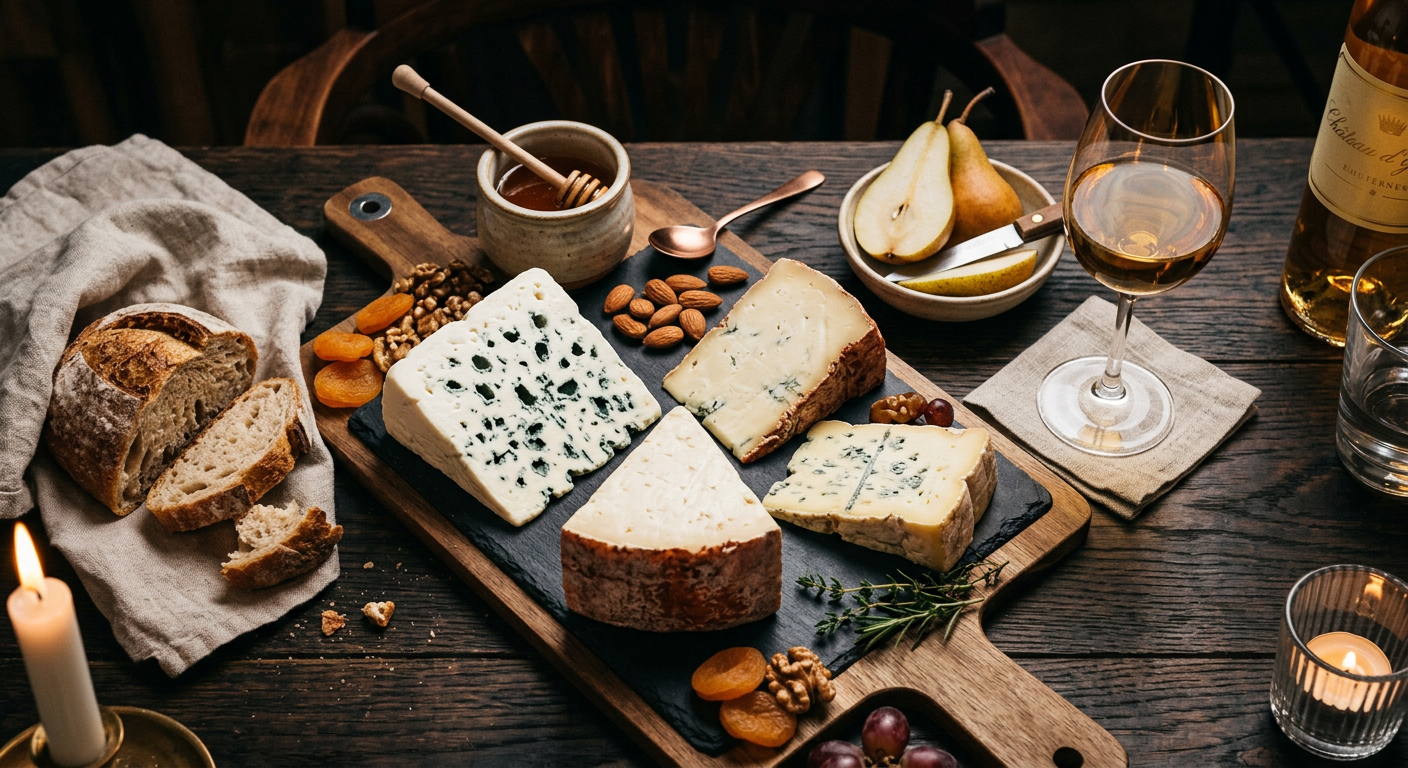
The world of blue cheese is dominated by two legendary titans: Roquefort from France and Gorgonzola from Italy. While both owe their distinctive blue-green veining to the same family of molds, these cheeses tell remarkably different stories of terroir, tradition, and taste. Whether you're exploring the cheese selection at Murray's Cheese inside City Market or planning your next culinary adventure, understanding these iconic blues will transform how you appreciate artisanal dairy.
The Science Behind the Blue
The magic of blue cheese begins with Penicillium roqueforti, an aerobic fungus that has been domesticated over centuries to thrive in the harsh, high-salt environments of aging cheese wheels. This isn't just any mold, it's a sophisticated microorganism that has evolved specifically for cheesemaking through horizontal gene transfer, acquiring DNA segments that enhance its ability to metabolize milk fats and proteins.
Two key biochemical processes create the complex flavors we love. Lipolysis breaks down fats into fatty acids, which then convert into methyl ketones, particularly heptan-2-one, the compound responsible for that characteristic "blue" aroma. Meanwhile, proteolysis breaks down milk proteins into smaller peptides and amino acids, creating the creamy texture and intense umami flavors. In Roquefort, this process produces exceptionally high levels of free glutamate, 1,280 mg per 100 grams of cheese.

Pro Pairing Tip: The high glutamate content in Roquefort makes it a natural partner for sweet wines like Sauternes, which balance the cheese's intense savory notes.
Roquefort: The King of Cheeses
Roquefort's story begins in the limestone caves of Mont Combalou in southern France, where legend tells of a young shepherd who forgot his lunch of rye bread and sheep's milk cheese in a cave. When he returned weeks later, he discovered the bread covered in mold and the cheese transformed into a blue-veined masterpiece.
Historical evidence suggests Roquefort-like cheeses existed during Roman times, with Pliny the Elder referencing them in 79 AD. The cheese gained royal approval when Charlemagne encountered it during his travels through southern France. But the real turning point came in 1411, when King Charles VI granted the inhabitants of Roquefort-sur-Soulzon exclusive rights to ripen cheese in the local caves, effectively creating the world's first geographical food protection.
The Unique Production Process
Authentic Roquefort must be made from raw, whole milk from Lacaune sheep. These hardy animals graze on the rocky, herb-rich landscapes of the Massif Central, producing milk with exceptionally high fat and protein content. At least three-quarters of their grain must also come from the region, ensuring the terroir influences every aspect of the cheese.

The defining stage occurs in the Combalou caves, where millions of years of geological activity created a network of fissures called fleurines. These natural vents create a "chimney effect," maintaining constant air circulation, 98% humidity, and temperatures between 12°C and 14°C. This unique environment prevents rind formation, leaving the entire cheese edible from exterior to center.
Terroir Tales: The caves' natural ventilation system is so precise that even slight changes in outside atmospheric pressure can affect the cheese's development. Producers now use high-resolution monitoring to ensure the delicate balance remains stable.
Ingredients and Characteristics
- Milk: Raw, whole Lacaune sheep's milk
- Rennet: Traditional animal rennet
- Aging: Minimum 90 days in Combalou caves
- Allergens: Contains milk
- Appearance: Brilliant white paste with emerald green to royal blue veining
- Texture: Creamy, melt-in-the-mouth
- Flavor: Intensely salty, sharp, with metallic and mineral notes
Gorgonzola: Italy's Blue Treasure
Gorgonzola's origins trace back to 879 AD in the town of Gorgonzola near Milan. Originally called "Stracchino di Gorgonzola" or "Stracchino Verde," the name derives from stracco, meaning "tired", referring to cows exhausted after their autumn descent from Alpine pastures to the Po Valley during transhumance.
Like Roquefort, Gorgonzola has its own romantic origin story. A young cheesemaker, distracted by his lover, left his cheese curds draining overnight. To hide his mistake, he mixed the old, oxidized curds with fresh ones the next morning. The uneven mixing created air pockets where local Penicillium spores flourished, creating the first blue-veined Gorgonzola.
From Artisan to Industrial
The 19th century marked Gorgonzola's transformation from purely artisanal to industrial production. Mattia Locatelli built the first large-scale maturation facility in 1860, enabling exports to London, New York, and Buenos Aires. Today, Novara serves as the "capital" of Gorgonzola, accounting for nearly 45% of total production.
Two Distinct Personalities
Gorgonzola comes in two regulated varieties, each with distinct characteristics:
Gorgonzola Dolce is the milder, creamier version. Aged 50-150 days, it features a spreadable texture and sweet, slightly milky flavor with sparse light-blue streaks. It's perfect for risottos, spreads, and fruit pairings.
Gorgonzola Piccante, also known as "mountain Gorgonzola," is aged 80-270 days. It's firmer, more crumbly, with extensive dark-blue veining and a sharp, pungent flavor that works beautifully in salads and robust sauces.
Pro Pairing Tip: Try Gorgonzola Dolce with fresh pears and honey for a classic Italian dessert, or melt it into polenta for an indulgent side dish.
Ingredients and Characteristics
- Milk: Pasteurized cow's milk
- Rennet: Traditional animal rennet
- Aging: 50-270 days depending on variety
- Allergens: Contains milk
- Appearance: Pale straw-colored paste with greenish-blue veining
- Rind: Thick, reddish-brown (inedible)
- Texture: Ranges from creamy (Dolce) to firm and crumbly (Piccante)
The Great Blue Cheese Showdown
While both cheeses share the Penicillium family, their differences are striking. Roquefort's sheep's milk creates a brilliant white paste with no rind, while Gorgonzola's cow's milk produces a pale yellow interior protected by a thick, inedible rind. Roquefort tends toward intense saltiness and mineral notes, while Gorgonzola offers more buttery, mushroom-like flavors.
The production environments also differ dramatically. Roquefort's aging relies entirely on natural cave conditions that have remained unchanged for centuries, while Gorgonzola production has embraced modern technology to replicate ideal aging conditions across multiple facilities.
Cultural Significance and Culinary Applications
In French dining culture, Roquefort holds a place of honor on the cheese course, traditionally served after the main dish. Proper etiquette dictates cutting wedges from center to edge, ensuring everyone receives an equal distribution of paste and veining. The cheese pairs classically with Sauternes wine and crusty bread.
Gorgonzola, meanwhile, serves as a culinary workhorse in Italian kitchens. Beyond the cheese board, it melts beautifully into risottos, creates luxurious pasta sauces, and transforms simple gnocchi into comfort food perfection. The Dolce variety even appears in modern dessert applications, paired with dark chocolate or fresh fruit.
Economic Impact and Market Trends
Both cheeses represent significant economic forces. Gorgonzola production reached record highs in 2025 with over 5.4 million wheels produced, generating more than €460 million in value. Roquefort, while smaller in volume due to geographical constraints, maintains premium pricing and strong export markets, particularly in Germany, Spain, and the United States.
Terroir Tales: The limited production capacity of Roquefort's caves means only about 3 million wheels can be aged annually, contributing to its premium status and higher prices compared to Gorgonzola.
Sustainability and Future Challenges
Both cheeses face modern sustainability challenges. Roquefort's dependence on the Combalou caves makes it vulnerable to climate change, as rising temperatures could disrupt the delicate natural ventilation system. Gorgonzola's industrial production requires significant energy for refrigeration and climate control.
Producers are responding with innovative monitoring systems and energy-efficient technologies while maintaining traditional quality standards. The challenge lies in preserving centuries-old methods while adapting to environmental realities.
Making Your Choice
Whether you prefer Roquefort's intense, mineral-driven complexity or Gorgonzola's approachable, buttery richness, both cheeses offer windows into their respective terroirs and cultures. Roquefort represents the pinnacle of geographical specificity, a cheese that literally cannot be made anywhere else. Gorgonzola showcases Italian adaptability and culinary versatility.
For newcomers to blue cheese, Gorgonzola Dolce offers a gentle introduction, while experienced cheese lovers might gravitate toward Roquefort's uncompromising intensity. Both deserve places in any serious cheese lover's repertoire, representing not just different flavors, but different philosophies of cheesemaking itself.
Next time you're selecting cheese, remember that you're not just choosing a flavor, you're choosing between two thousand-year-old traditions, each shaped by unique landscapes, cultures, and the remarkable versatility of a single family of molds that transformed simple milk into culinary treasures.
Sources and Further Reading
- Academy of Cheese - Roquefort production and terroir analysis
- Consortium for the Protection of Gorgonzola PDO - Production statistics and regulations
- Di Bruno Bros. - Penicillium roqueforti science and applications
- Wisconsin Cheese - Blue cheese varieties and production methods
- National Geographic - Italian cheese traditions and cultural significance