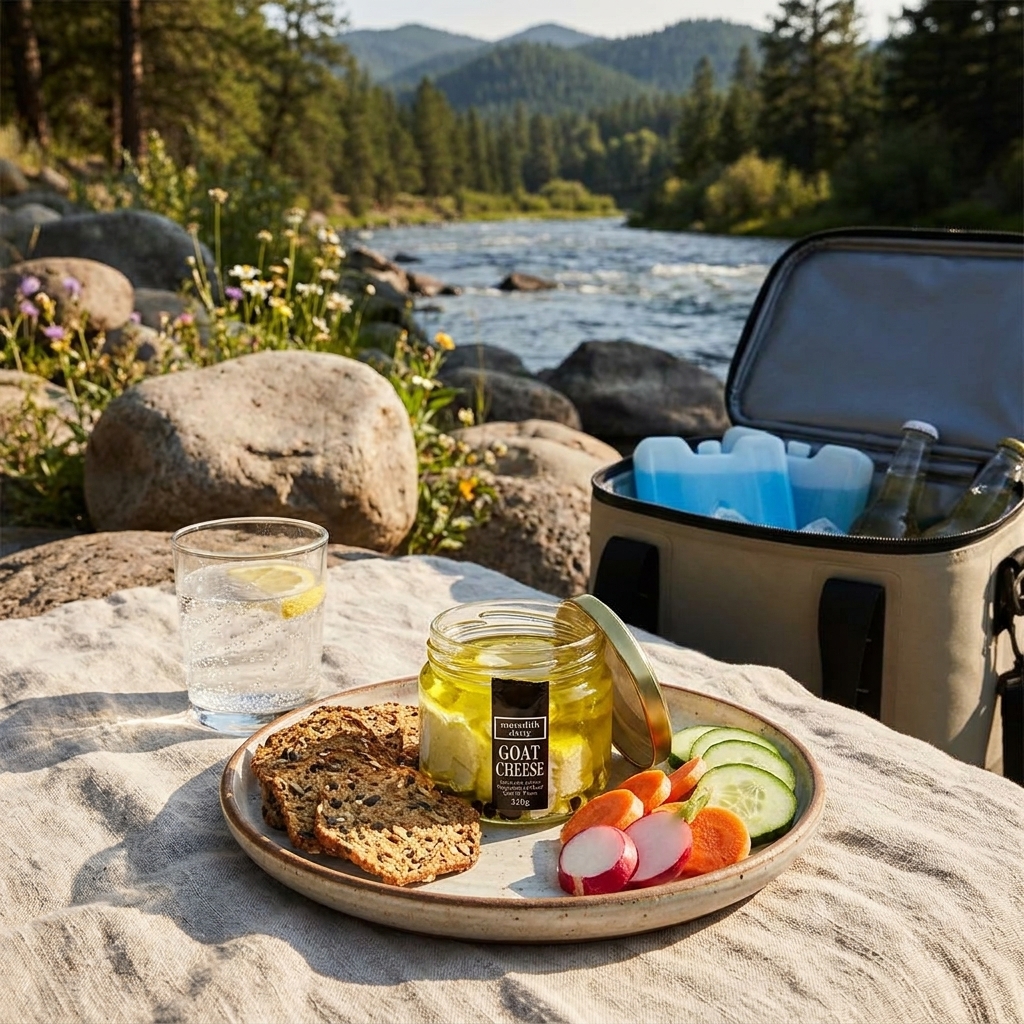
From a Victorian farm to your Colorado table
Meredith Dairy makes its Marinated Sheep and Goat Cheese in Meredith, a rural town west of Melbourne in Victoria, Australia. It is a place of pasture, livestock and seasonal rain, with a farming rhythm quite different from our snowy San Juan winters.
That landscape matters. An animal’s diet can affect the flavor and composition of its milk. But pasture is only part of the story. Animal care, milk handling and cheesemaking shape what eventually reaches your plate, too.
Meredith’s farm-based operation keeps those steps closely connected. Milk is made into cheese on the farm, with processing beginning within 24 hours of milking. That quick turnaround helps preserve a clean, fresh dairy flavor.

Terroir Tales: A change of plans in 1991
Sandy and Julie Cameron founded Meredith Dairy in 1991 as Australia’s wool industry faced a deep downturn. Sandy, a veterinarian, and Julie, a former intensive care nurse, turned toward sheep dairying to help keep their farm viable. Goat dairying followed in 1996.
It is a useful reminder that some memorable cheeses begin with a practical question: What else can this farm do?
Why blend sheep and goat milk?
Sheep milk brings richness. It generally contains more fat and protein than goat or cow milk, giving cheesemakers plenty of material for a full, creamy curd.
Goat milk contributes its own flavor and texture. Its characteristic fatty acids can lend a gentle earthy edge, while its protein makeup influences how the curd forms. Together, the two milks make a cheese that tastes generous without feeling ponderous.

The bright tang comes largely from fermentation. Starter cultures turn milk sugar into lactic acid, which helps develop both flavor and texture. Goat milk does not arrive in the vat tasting like lemon juice, despite what some tasting descriptions might suggest.
Meredith’s sheep-breeding work has also been part of the dairy’s development. Selecting animals for milk production helps support consistent cheesemaking. For the shopper, though, the most useful details are right on the jar: the milk blend, ingredients and storage instructions.
Ingredients, rennet and heat treatment
The cheese uses pasteurized sheep and goat milk, cultures, salt and non-animal microbial rennet. Its marinade blends extra-virgin olive oil and canola oil with garlic, thyme and peppercorns. Check the package in your hand for the current ingredient list.
Rennet is an enzyme preparation that helps milk set into curd. Microbial rennet comes from microorganisms rather than an animal’s stomach. That makes this cheese suitable for lacto-vegetarians, people who eat dairy but avoid animal-derived rennet. It is not vegan.
Allergen note: This cheese contains milk. Sheep and goat milk are not safe substitutes for many people with cow’s milk allergy, and this fresh cheese should not be assumed to be lactose-free.
Pasteurization means heating milk under controlled conditions to reduce harmful microbes. A common method uses at least 161 degrees Fahrenheit for 15 seconds, although that is a general dairy-processing example, not a description of Meredith’s exact equipment or production settings.
Pasteurized does not mean shelf-stable. This is still a perishable fresh cheese that needs refrigeration.
Fresh, soft and marinated, not cave-aged
The most useful style labels are simple: fresh, soft, farmstead and marinated. You may also see it described as feta-style, though its texture sets it apart from many brined block fetas.
The basic sequence explains why:
- Milk is pasteurized, then cultures and rennet help it set.
- The delicate curd drains gently rather than being pressed into a firm wheel.
- The cheese is portioned and packed in seasoned oil.
There is no traditional aging stage. Affinage, the care and ripening of cheese over time, is not what gives this product its character. The appeal lies in fresh curd, retained moisture and a flavorful marinade.
High moisture makes the cheese soft and easy to spread. It also makes careful cold storage important. The oil helps limit drying and carries flavor, but it does not turn the jar into a pantry preserve.
You might hear similar Australian cheeses called Persian feta or marinated feta. Think of those as style cues, not proof of Greek origin. Within the European Union, Feta is a protected name tied to specified Greek regions and production rules. Meredith’s descriptive name tells you exactly what to expect: sheep and goat cheese, marinated.
What it tastes and feels like
Taste a small piece before adding bread or wine. The first impression is rich and creamy, followed by a bright dairy tang. Garlic brings savory warmth, thyme adds a woody herbal note, and peppercorns provide a lingering spicy edge. Olive oil adds its own grassy or fruity accents.
The goat character is generally gentle rather than forceful. If you usually pass on goat cheese because you expect a barnyard punch, this is a reasonable one to revisit. It still tastes like sheep and goat milk, which is rather the point.
Texture may be its strongest argument. A cube holds together on a spoon, then yields under a knife into a soft, satiny spread. Compared with a typical block feta, it is less about crumbles and more about a thick smear across toast.
The marinade adds another layer of richness. It also contributes fat and calories, so use the jar’s nutrition label rather than assuming a spoonful of cheese and oil matches plain fresh cheese. A little can season a surprisingly large plate of vegetables.
Whole peppercorns can deliver a sharp bite. Woody thyme stems are best left behind when serving.
A simple way to serve it well
You do not need an elaborate cheese board. Start with good bread and something fresh or tart.
- Spoon out only what you plan to eat, using a clean utensil.
- Let that portion stand for about 15 to 20 minutes while you prepare the rest of the plate.
- Add warm sourdough or sturdy crackers, sliced cucumber and tomatoes.
- Taste before adding salt. The cheese may supply all you need.
For a Pagosa Springs picnic, carry the jar in a cooler with ice packs. A shaded spot beside the river is lovely, but shade is not refrigeration.
If you are shopping locally, ask at Murray’s Cheese inside City Market about Meredith Dairy and current availability. For visitors, a jar, bread and vegetables make an easy rental-kitchen supper without a long shopping list.
Wine pairings: Keep it bright
Crisp wines offer a refreshing contrast to the cheese’s richness. They need not be expensive or complicated.
- Sauvignon blanc: A strong first choice. Citrus and green herbal notes work well with tangy curd and thyme. Try Marlborough or Australia’s Adelaide Hills.
- Semillon: Young Hunter Valley semillon brings lemony freshness. An older bottle can offer waxy, toasty notes that take the pairing in a richer direction.
- Dry rosé: Red-fruit flavors provide a pleasant contrast to garlic and salt. A restrained, lightly chilled grenache can work if you prefer red wine.
- Dry sparkling wine: Prosecco rosé or another crisp sparkler keeps the pairing lively. Brachetto is often sweet, so check the style rather than assuming every bottle will deliver the same effect.
Pro Pairing Tip
Build the pairing around the whole bite. Cheese on cucumber welcomes a lean, citrusy wine. Cheese spread on toast beside roasted lamb can handle a little more body. Heavy oak and strong tannins would not be my first picks for either plate.
Beer pairings: Wheat, spice and a little tartness
Beer has plenty to offer here, especially styles with lively carbonation and modest bitterness.
Witbier often brings citrus and coriander notes that suit the herbs. Hefeweizen offers a different combination, commonly banana and clove, for a softer, fruitier contrast.
Saison is a particularly good match when it is dry and peppery. Those spicy yeast notes sit comfortably beside thyme and black pepper without overwhelming the dairy.
Gose or Berliner weisse supplies tartness that echoes the cheese’s tang. With gose, keep the rest of the plate light on salt. The beer and cheese may already have that covered.
Prefer no alcohol? Sparkling water with lemon is a clean, useful companion. The cheese provides plenty of flavor on its own.
Turn the jar into dinner
This cheese earns its refrigerator space by doing more than looking attractive beside crackers.
For summer salads: Spoon it over tomatoes, cucumbers and greens. Toss gently if you want distinct pieces; toss more firmly if you want the soft cheese to coat the vegetables.
For roasted vegetables: Add it after carrots, beets, squash or asparagus come out of the oven. The warmth softens the cheese into creamy pockets. It is especially welcome on a cold evening after a day at Wolf Creek.
For pasta: Reserve a mug of pasta water before draining. Off the heat, stir cheese into the warm noodles, then add small splashes of the starchy water until you have a loose coating. Taste before seasoning. No need to start with cream or butter.
For pizza: Add small spoonfuls after baking to preserve the fresh flavor and soft texture.
For soups and meats: Use a modest dollop on tomato or butternut squash soup, or serve it alongside grilled chicken or roasted lamb.
Pro Pairing Tip: Use the oil, too
While the jar is still within its labeled storage period and has been handled safely, the marinade can become a quick dressing. Start with 3 teaspoons of oil and 1 teaspoon of lemon juice or vinegar. Whisk, taste and adjust.
Treat that oil as perishable, just like the cheese. Do not save it indefinitely, leave it on the counter or refill the jar with fresh garlic for storage.
Cloudy oil or spoiled cheese?
Cold olive oil can turn cloudy or form pale, waxy clumps. That is a normal physical change, not automatically mold. A small serving may become clearer as it warms briefly before eating.
Actual warning signs include fuzzy growth, unusual pink or orange discoloration, new slime, or a distinctly rotten, rancid or yeasty smell. Softness alone is normal for this cheese. A new slick, slimy coating is not.
If mold appears, discard the whole jar. Do not scrape it off or rescue cubes from below the oil.
Just as important: Harmful bacteria do not always change a food’s smell, taste or appearance. Never taste questionable cheese to test its safety.
Keep the jar at 40 degrees Fahrenheit or below, and follow its use-by date and after-opening directions. Return it promptly to the refrigerator. Discard perishable cheese left out for more than two hours, or one hour when temperatures exceed 90 degrees. That includes time in a hot car after shopping.
Garlic-in-oil mixtures require particular care because improper storage can allow botulism toxin to develop. Commercial preparation is not a home-preservation recipe, and oil is not a substitute for refrigeration.
A farm story worth knowing
Meredith’s environmental work includes solar power, manure recycling, native tree planting and land set aside for conservation. These are concrete practices, not a reason to assume any food has no environmental footprint.
They also connect the cheese to a larger farming story: finding ways to keep land productive while caring for what surrounds it. In a place like Pagosa Springs, where working landscapes and outdoor life sit so close together, that is worth paying attention to.
And the pronunciation? MEH-ruh-dith DAIR-ee MAIR-ih-nay-ted SHEEP and GOHT CHEEZ. No verbal obstacle course required.
Buy it for the creamy texture. Keep it for the weeknight usefulness. Start with warm toast, then let the next dinner suggest itself.
Sources and Further Reading
- Marinated Sheep & Goat Cheese, Meredith Dairy.
- Our Story & Vision, Meredith Dairy.
- Sustainability, Meredith Dairy.
- Meredith Dairy Marinated Feta, Formaggio Kitchen.
- Safe Food Handling, U.S. Food and Drug Administration.