Colorado's Artisan Cheese Revolution: From Mountain Pastures to Award-Winning Plates
Discover how Colorado's cheesemakers are transforming high-altitude dairy farming into a world-class artisan industry that's putting the Rocky Mountain state on the global cheese map.
Estimated Reading Time: 6 min
Colorado's cheese scene has undergone a remarkable transformation over the past four decades. What began as traditional commodity dairy farming has evolved into a sophisticated artisan industry that leverages the state's unique mountain terroir to create award-winning cheeses. From the fertile valleys of the Western Slope to the high-altitude pastures of the central mountains, a new generation of cheesemakers is proving that Colorado can compete with the world's best dairy regions. These producers aren't just making cheese; they're crafting edible expressions of Colorado's landscape, climate, and agricultural heritage.

The Artisan Ecosystem: Where Tradition Meets Innovation
Colorado's cheesemaking community spans from large commercial creameries to tiny farmstead operations where the milk never leaves the property. The distinction matters: "farmstead" producers use only milk from their own animals, creating a direct link between pasture health and final flavor. Commercial creameries source from multiple dairies, allowing them to scale production and experiment with diverse milk types including goat, sheep, and even water buffalo.
Commercial Powerhouses Leading the Way
MouCo Cheese Company in Fort Collins stands as a benchmark for soft-ripened cheese production in America. Founded in 2001 by Birgit Halbreiter and Robert Poland, MouCo has built its reputation on the "nurturing" process, labor-intensive techniques involving precise timing of flipping and washing rinds to achieve specific microbial development. Their "ColoRouge" washed-rind cheese transitions from buttery and mild to bold and earthy as it matures, while their "Truffello" infuses real Italian black truffles into Camembert-style cheese for luxury-seeking consumers.
Haystack Mountain Goat Dairy in Longmont represents successful scaling of the artisan model. Starting with just five goats on six acres in 1988, founder Jim Schott has grown the operation into a major commercial force. Under cheesemaker Jackie Chang's leadership, they've developed innovative products like "Bufala Soldier," a winter seasonal that blends cow, goat, and water buffalo milk for a rich, acidic, and buttery profile. Their cheeses appear on upscale menus throughout Denver, including Rioja's signature artichoke tortelloni.
Farmstead Excellence: Terroir in Every Bite
Farmstead producers exemplify the "terroir-driven" approach that makes Colorado cheese unique. Fruition Farms in Larkspur, owned by Chef Alex Seidel, began in 2010 with forty ewes and has become a critical supplier to Denver's high-end restaurants. Their "Cacio Pecora" sheep's milk cheese captures the specific flora of Larkspur pastures.

James Ranch near Durango produces "Belford," an aged raw-milk cheese that relies on natural enzymes and bacteria from cows grazed on lush, high-altitude grass. Moon Hill Dairy in Steamboat Springs focuses on regenerative practices, with owner John Weibel and cheesemaker Laura Chisholm treating soil health as the foundation of their cheesemaking.
Pro Pairing Tip: Colorado's high-altitude cheeses pair beautifully with local wines. Try MouCo's Ashley with a Colorado Riesling, or Haystack Mountain's goat cheese with a Palisade Gewürztraminer.
From Commodity to Craft: The Webb Family Legacy
The story of Rocking W Cheese in Olathe illustrates the economic transformation possible in artisan dairy. This sixth-generation operation has been a Western Slope fixture for over 65 years. For most of its history, the Webb family sold fluid milk into the commodity market, where farmers are "price takers" subject to volatile national pricing.
Forty-three years ago, they began a strategic pivot toward value-added production. By establishing an on-site creamery, the Webbs transformed from "price takers" to "price setters," capturing significantly more value from their raw milk.
Today, Robert and Charlotte Webb, alongside Caryn Gibson and her husband John, operate a true farmstead using only milk from their own dairy cows. Their fresh cheese curds are renowned for their signature "squeak", a hallmark of ultra-fresh cheddar. Beyond curds, they produce Asiago, Baby Swiss, Chipotle Jack, and mild white cheddar, all designed to be accessible yet high-quality.
Terroir Tales: The "squeak" in fresh cheese curds comes from protein strands that haven't yet broken down. At Rocking W, curds are packaged within hours of production, ensuring maximum squeakiness for customers.
The Buena Vista Transition: Honoring Legacy While Building Future
The central mountains of Colorado have long been a focal point for artisan goat cheese. The site in Buena Vista that now houses Colorado Farmhouse Cheese Co. has a storied history beginning with Dawn Jump's Jumpin' Good Goat Dairy, founded in 2002.
Jump pioneered specialized products like wine-soaked cheddar and fresh Mexican-style quesos, creating "terroir-driven" goat cheeses that tasted of high-mountain flora. The transition to Colorado Farmhouse Cheese Co. represents modernization of this legacy, maintaining high standards while expanding production scope and integrating cow milk products to reach broader demographics.
Navigating the Regulatory Landscape
Colorado's cheese production operates under rigorous oversight from the Colorado Department of Public Health and Environment (CDPHE). The licensing system is tiered by product type and operation scale, all rooted in federal Grade "A" Pasteurized Milk Ordinance standards.
Annual fees are scaled to operation size: producers receiving under 1,000 pounds of milk daily pay $390 annually, while large plants receiving 450,000 pounds or more pay $2,080 plus volume-based assessments. This structure ensures small artisan producers aren't disproportionately burdened.
For raw-milk cheese producers, Colorado mandates strict 60-day aging at specific temperatures to ensure pathogen reduction. Recent H5N1 avian influenza emergence in dairy cattle has prompted additional voluntary testing guidance, highlighting the dynamic nature of dairy regulation.
Ingredients: Most Colorado artisan cheeses use pasteurized cow, goat, or sheep milk, traditional rennet, salt, and specific bacterial cultures. Always check labels for allergen information, particularly if you have milk protein sensitivities.
Market Trends Driving Growth
The Rocky Mountain artisan cheese market is experiencing strong growth, driven by consumer preference for "clean label" products free from artificial additives. Key trends include:
Proteinization: The protein-forward diet trend has revitalized interest in cottage cheese and fresh curds as versatile, high-protein snacks.
Snackification: Rising demand for portable, protein-rich options like artisanal cheese packs.
Flavor Innovation: Producers experiment with adventurous pairings, including truffle-infused cheeses and wine-soaked varieties.
Culinary Tourism: Growth of boutique hotels and high-end restaurants in resort towns creates captive audiences for exclusive, locally produced selections.
E-commerce has democratized access, with online sales projected to grow 7.1% annually through 2030, allowing small Colorado producers to reach national audiences without extensive traditional distribution networks.
Competition Success: Validating Quality on National Stage
Success in national competitions provides critical marketing validation for Colorado cheesemakers. The American Cheese Society (ACS) competition and World Championship Cheese Contest (WCCC) represent the industry's highest honors.
MouCo Cheese Company has consistently earned ACS recognition, with first-place wins in 2004, 2007, 2012, 2013, and 2016. In 2023, their cheddar cheese curds earned second place in a category where no first place was awarded.
Three Sisters Farmstead Cheese secured first place in 2005 for their "Bella Sorella" variety, while Haystack Mountain frequently receives recognition for goat milk cheeses.
The WCCC, held biennially in Madison, Wisconsin, is the world's largest technical dairy evaluation. In 2024, it featured 3,302 entries from 25 countries. Biery Cheese Co., with its Colorado facility in Louisville, has won "Best of Class" (2014, 2016), demonstrating Colorado manufacturing can reach the highest global standards.
Where to Find Colorado's Finest
Many of these exceptional Colorado cheeses are available right here in Pagosa Springs at Murray's Cheese inside City Market. Murray's partnership with local producers ensures you can taste the terroir of Colorado's high-altitude dairy farms without traveling across the state.
Whether you're seeking MouCo's award-winning soft-ripened varieties, Haystack Mountain's innovative goat cheeses, or Rocking W's squeaky-fresh curds, these local treasures represent the best of Colorado's artisan dairy revolution.
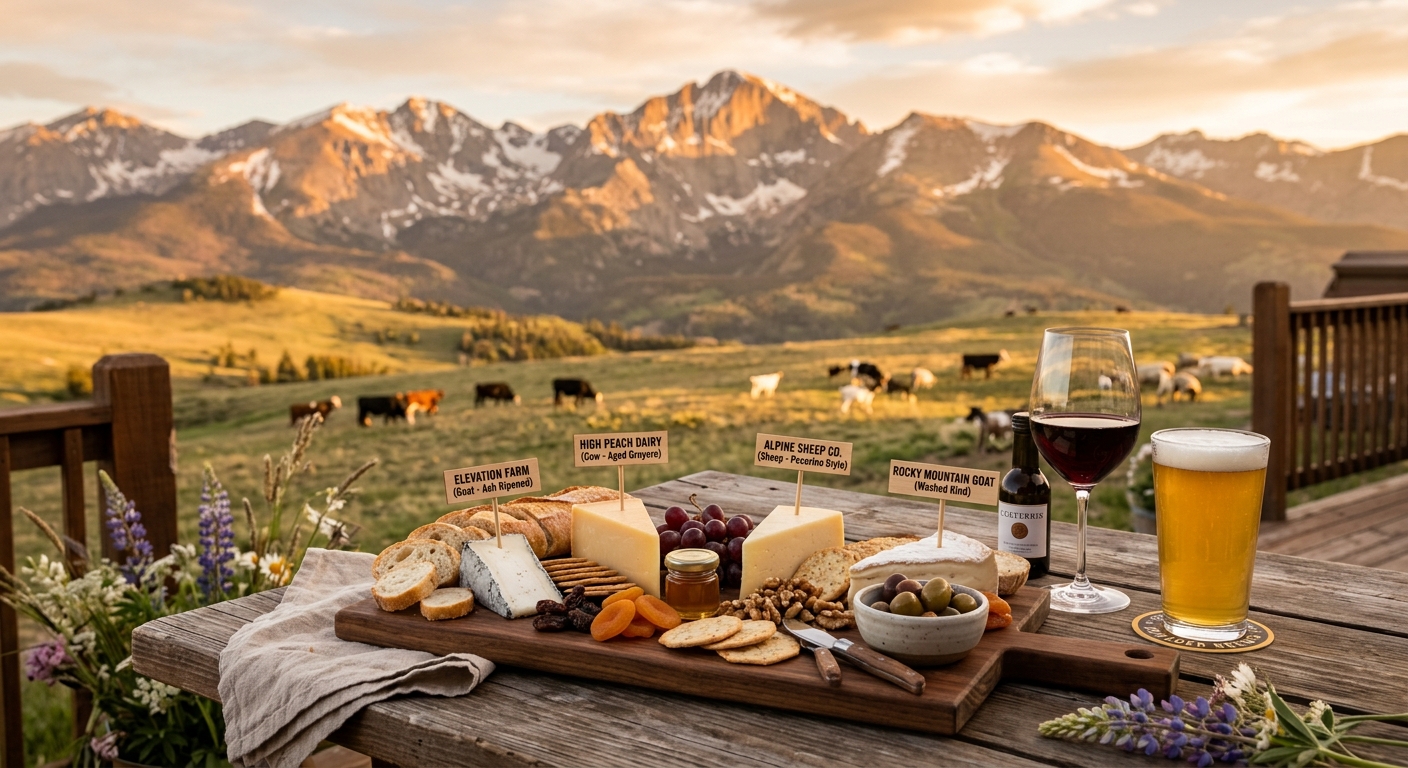
Pro Pairing Tip: Create a Colorado cheese board featuring three different milk types, cow, goat, and sheep, paired with local honey, Palisade peaches (in season), and Colorado craft beer for the ultimate Rocky Mountain tasting experience.
Sources and Further Reading
- American Cheese Society Competition Results and Guidelines
- Colorado Department of Public Health and Environment Dairy Regulations
- TasteAtlas Colorado Cheese Directory
- World Championship Cheese Contest Official Records
- Westword Denver Food and Drink Coverage
