Estimated Reading Time: 7 min
A Vermont cheese with two sets of hands
Cabot Clothbound Cheddar is made in Vermont, but its identity comes from a partnership rather than a single cheese room. Cabot Creamery, a farmer-owned cooperative, makes the young wheels. The Cellars at Jasper Hill in Greensboro, in Vermont’s Northeast Kingdom, handles their aging.
That second job is called affinage: the care that guides a cheese from fresh curd to a mature wheel. It involves more than putting cheese on a shelf and checking the calendar. Temperature, humidity, brushing, turning and tasting all shape the result.

Jasper Hill’s 22,000-square-foot underground aging facility contains seven vaults. These separate spaces let the team manage conditions for different cheeses. For Clothbound, the goal is a firm cheddar with a natural rind, a savory center and enough sweetness to keep you reaching for another piece.
What’s in it, and why the milk matters
Cabot Clothbound is made with pasteurized cow’s milk. Its single-farm milk supply comes from Kempton Farm in Peacham, Vermont, whose herd is primarily Holstein. Using milk from one farm helps the cheesemakers maintain a consistent starting point for wheels that will spend roughly a year aging.
The cheese has no added coloring. Its interior, often called the paste, ranges from pale ivory to buttery yellow. Natural pigments in cow’s milk, including beta-carotene from the animals’ feed, contribute to that color. Orange cheddar usually gets its deeper hue from annatto, a plant-derived coloring. Neither color is a reliable quality score.
Ingredients and dietary essentials: Expect cow’s milk, cultures, salt and microbial rennet, plus animal lard used in the clothbinding process. Milk is the main allergen. Check the current package label for the full ingredient declaration.

There is an important catch for vegetarian shoppers. Microbial rennet, the enzyme preparation that helps milk set into curd, is not animal-derived. But the wheel is treated with lard. The finished cheese should not be treated as vegetarian, and trimming the rind does not change how it was made.
Pasteurized does not mean plain
Pasteurization heats milk to reduce harmful microorganisms. A common method holds milk at 161 degrees Fahrenheit for at least 15 seconds, though pasteurization can use other approved time-and-temperature combinations.
It does not sterilize the milk or make it biologically inactive. Cheesemakers add starter cultures to turn lactose, milk’s sugar, into lactic acid. Those cultures help control acidity, curd formation and later flavor development.
Cabot Clothbound is a useful answer to the claim that only raw-milk cheese can taste complex. Milk treatment matters, but so do cultures, cheesemaking skill and months of careful aging. Quite a lot happens after the milk leaves the vat.
What the cloth actually does
Cheddar takes its name from both a place in England and a cheesemaking process. During cheddaring, slabs of curd are stacked and turned to help drain whey and develop the right structure. The curd is then milled into smaller pieces, salted and pressed.
For Cabot Clothbound, young wheels reach Jasper Hill at about three days old. There, lard helps bind layers of cloth to their surfaces. This traditional bandage protects the wheels while allowing gradual moisture loss and rind development.
The result fits several useful descriptions: aged cheddar, clothbound or bandaged cheese, and natural-rind cheese. Retailers may classify it as hard or semi-hard. Those terms overlap; expect a firm, crumbly cheese rather than a springy sandwich slice.
“Farmhouse-style” describes its traditional character, but it is not the same as saying the cheese is made and aged entirely on the farm that supplies its milk. This is a cooperative-and-affineur collaboration. That distinction is part of its appeal, not something to hide.
Roughly a year of patient work
Cabot Clothbound typically ages for about 9 to 14 months, with release timing guided by how the wheels develop. Each wheel weighs roughly 35 pounds. Turning and brushing them is skilled work, with a fair amount of lifting attached.
Over time, enzymes break proteins into smaller compounds, including amino acids. This is proteolysis, and it helps change both texture and flavor. The breakdown of fats, called lipolysis, also contributes aroma. Neither process suddenly switches on at a certain birthday; both evolve throughout maturation.
The cloth allows more moisture to escape than a sealed plastic wrapper would. That helps explain the cheese’s denser texture and concentrated flavor.
For context, the U.S. standard for cheddar permits no more than 39% moisture and requires at least 50% milk fat in the dry matter. That last phrase means the portion remaining after water is excluded, not that half the wedge’s total weight must be fat. These are legal standards, not a laboratory measurement of the piece on your board.
Selected wheels are sold as Black Label Cabot Clothbound. Selection reflects distinctive flavor and development, not simply a rule that older cheese is always better.
Taste beyond “sharp”
Sharpness is only one part of cheddar. With Cabot Clothbound, start by looking for savory depth, toasted nuts and a caramel-like finish.
Some bites suggest broth or roast chicken. Others lean toward cultured butter, toast or a bright, fruity tang. Umami is the word often used for that mouth-filling savory quality. Think broth, not added meat flavoring.
Jasper Hill’s tasting vocabulary includes four recurring profiles: “Umami & Roasted,” “Yolky & Bright,” “Chicken & Pineapple,” and “Brown Butter & Toast.” These are sensory comparisons, not ingredients. No pineapple chunks are hiding in the wheel.
The texture adds another layer. A piece can feel firm and crumbly at first, then soften into a rich, creamy mouthful as it warms. You may also notice small crunchy crystals. In aged cheddar, these can include calcium lactate or tyrosine, an amino acid. They are not necessarily grains of salt, and their presence alone does not rank one wheel above another.
Try this three-bite tasting
- Taste a small piece plain. Let it soften before deciding what you notice.
- Take a second bite with apple. Look for the contrast between fresh acidity and savory richness.
- Try a sip of your drink, then another bite. Does the cheese seem sweeter, nuttier or sharper?
There is no need to find every tasting note. “Nutty, savory, would buy again” is a perfectly useful conclusion.
Wine, cider and beer that make sense
For wine, Cabernet Sauvignon can work well with the cheese’s firm texture and rich flavor. An oaked example may echo its toasted notes. Syrah offers another route, with dark fruit and pepper playing against the brothy side of the cheddar.
Prefer something lighter? Try an off-dry sparkling cider or a demi-sec sparkling wine. A little sweetness complements the caramel finish, while acidity and bubbles provide a refreshing contrast.
Beer may be the easiest starting point. Pale ale brings citrus or resinous hop notes and a bitter counterpoint to the cheese’s richness. An IPA can work, too, though a very bitter one may crowd out subtler flavors.
Stout and dark lager lean into toast, roasted grain and nuttiness. Saison offers a brisk, lively contrast. Sour ale is worth testing in a small pour; intense acidity can dominate rather than help.
Pro Pairing Tip
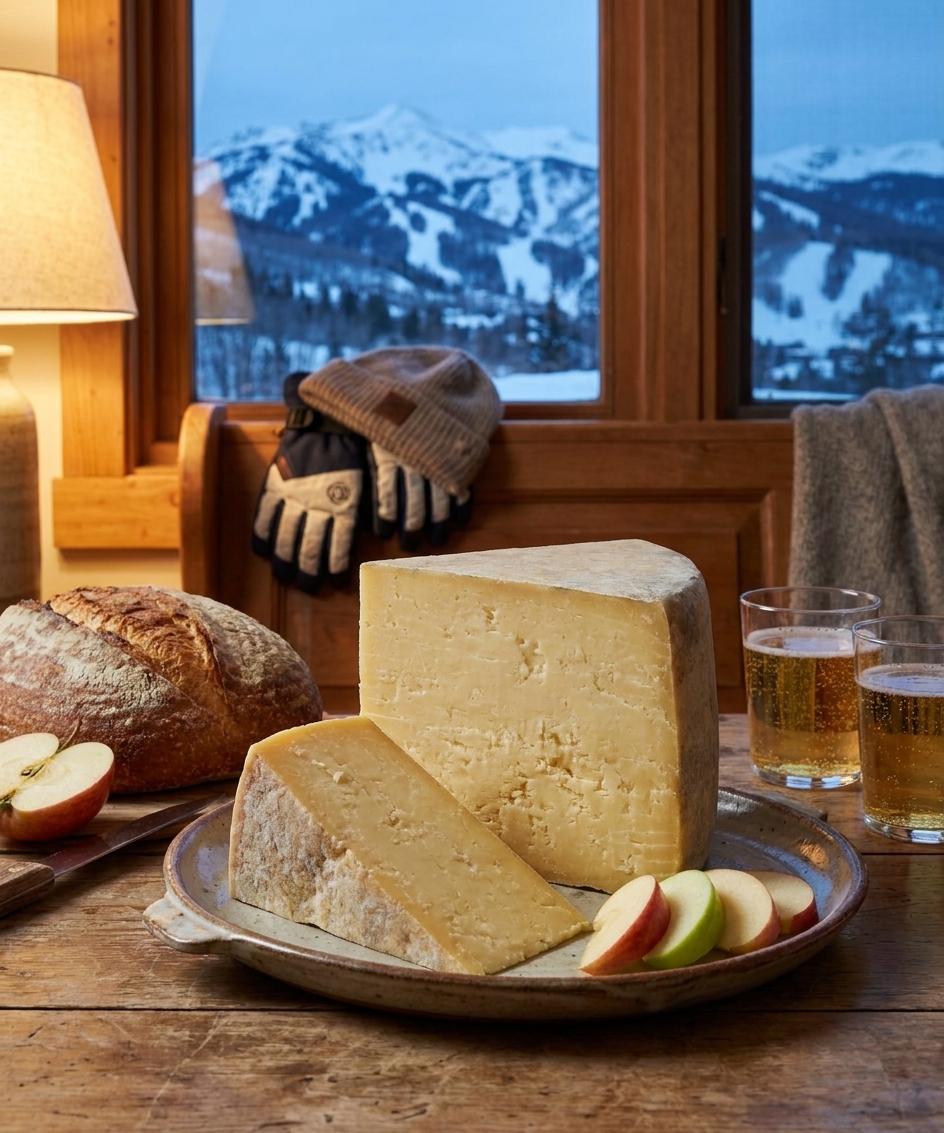
Start with a moderately malty dark lager or sparkling apple cider before reaching for the biggest drink in the refrigerator. For an alcohol-free option, try sparkling apple juice or sparkling water alongside fresh apple slices. After a day at Wolf Creek, the pairing need not become another demanding activity.
Build a board, or put it to work in dinner
Apples, pears, toasted nuts and plain bread give Cabot Clothbound room to speak. Apple preserves, chestnut honey or stone fruit mostarda add sweetness. Mostarda, a fruit condiment with mustard heat, also brings a useful little sting.
For a savory board, try prosciutto, smoky speck or mushroom pâté. Keep portions of honey and preserves modest. You want a contrast, not a cheddar-shaped vehicle for jam.
The cheese also belongs in baked mashed potatoes, toasted sandwiches and other cold-weather meals. My preference is to save a few plain pieces before cooking with the rest. Its subtle flavors are easier to appreciate without a casserole around them.
Aged cheddar can melt, but it may become oily or grainy under harsh heat. Grate it shortly before use, then stir it into a sauce over gentle heat rather than boiling it. For fondue, combine it with a cheese suited to smooth melting instead of expecting Clothbound to do all the work alone.
If you are shopping in Pagosa Springs, ask at Murray’s Cheese inside City Market about current Cabot Clothbound availability and a tasting portion. For visitors stocking a rental kitchen, one good wedge, an apple and a loaf of bread make a practical start.
Keep the good rind character, skip the spoilage
A mature clothbound rind can look earthy, dusty and mottled. That appearance is different from unexpected growth spreading across a freshly cut surface. Color alone cannot tell you whether a mold is harmless, and it cannot reliably identify the organism.
Remove any cloth before serving. The rind can taste stronger and earthier than the center; trimming it is fine.
Store the cheese refrigerated at 40 degrees Fahrenheit or below. Cheese paper, or parchment inside a loosely closed bag or container, helps protect the cut face without leaving it exposed to refrigerator air. Bring out only what you expect to serve, especially for a summer picnic beside the San Juan River.
Discard cheese that develops an unexpected slimy surface, a harsh chemical or ammonia odor, or widespread deterioration. Do not taste it to test its safety.
For a small, isolated mold spot on otherwise sound hard cheese, USDA guidance allows cutting away at least 1 inch around and below the spot, keeping the knife out of the mold. A thin wedge may not leave enough room to do that. Moldy shredded, sliced or crumbled cheese should be discarded. If a newly purchased piece seems questionable, contact the cheese counter.
Terroir Tales: An old method with a modern purpose
Cabot Clothbound emerged from the collaboration between Cabot and Jasper Hill’s Andy and Mateo Kehler in the early 2000s. In 2006, it won Best of Show at the American Cheese Society competition.
The partnership also helped support Jasper Hill’s growth as an aging hub for other cheesemakers. That is a meaningful part of its Vermont identity: shared infrastructure can help rural producers bring distinctive cheeses to a wider market.
Traditional aging methods have faced scrutiny, too. In 2014, an FDA interpretation concerning wooden cheese-aging shelves caused widespread concern. The agency later clarified its position rather than imposing a blanket ban. Wood still requires proper cleaning and food safety controls; tradition alone is not a safety plan.
And the name? Say KAB-uht KLAHTH-bownd CHED-er.
Then cut a piece, let it lose its refrigerator chill and taste it plain. Before adding honey or pouring wine, give the cheddar a minute to introduce itself.
Sources and Further Reading
- Cabot Clothbound, Jasper Hill Farm. Product details and tasting notes.
- The Cellars, Jasper Hill Farm. Aging facilities and the role of affinage.
- Library of Cheese: C, Saxelby Cheesemongers. Clothbound production and flavor profiles.
- Cheese: Misbranding Due to Moisture and Fat, U.S. Food and Drug Administration. Cheese composition standards.
- Molds on Food: Are They Dangerous?, USDA Food Safety and Inspection Service. Safe handling of mold on cheese and other foods.
