America's Cheese Revolution: How 42 Pounds Per Person Became the New Normal
From snack aisles to sustainability goals, the American cheese industry is experiencing unprecedented growth while navigating a complex landscape of innovation, environmental responsibility, and changing consumer habits.
Estimated Reading Time: 8 min
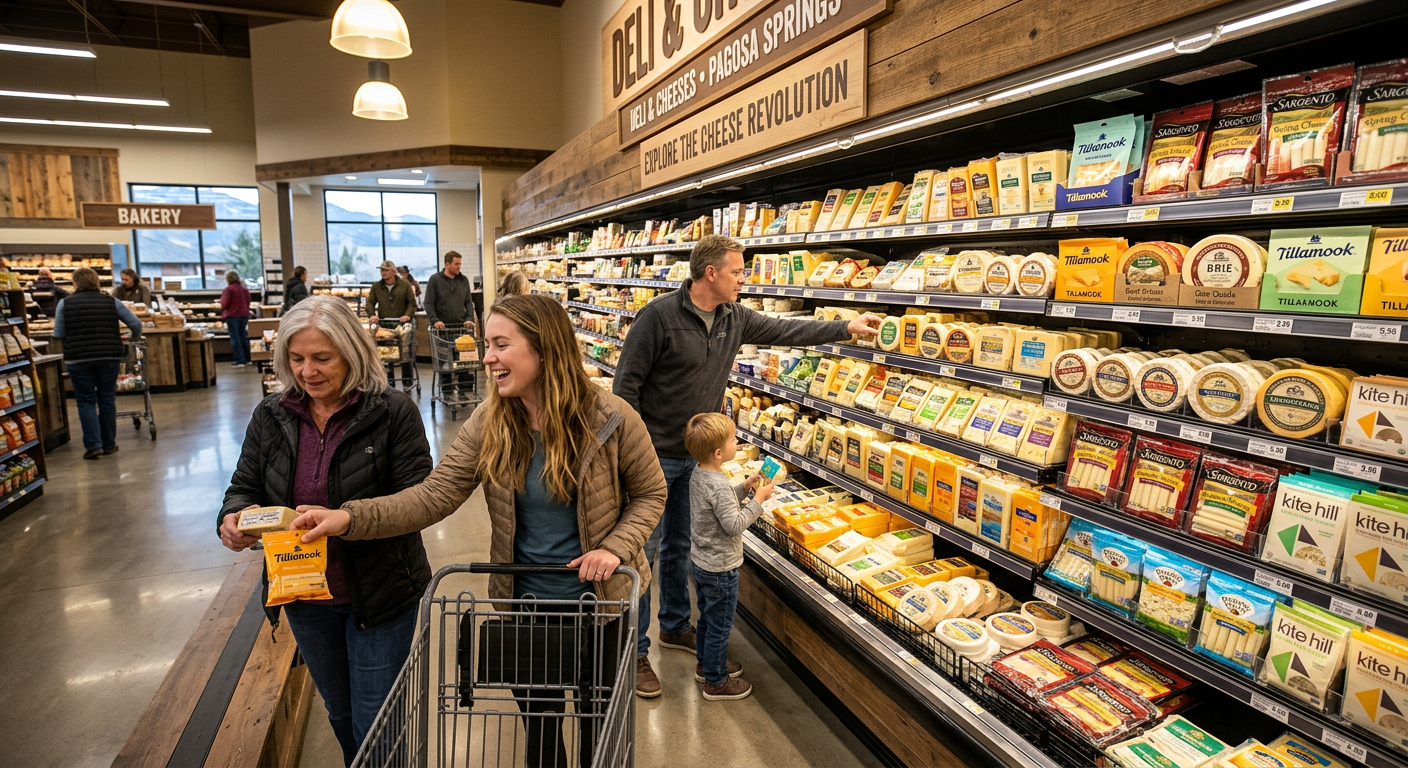
Walk into any grocery store in Pagosa Springs, and you'll witness a quiet revolution happening in the dairy aisle. While milk sales have plummeted over the past two decades, cheese consumption has soared to historic heights. Americans now consume nearly 42 pounds of cheese per person annually, almost double what we ate in 1980. This isn't just a statistical blip; it represents a fundamental shift in how we eat, snack, and think about dairy.

The numbers tell a compelling story. Since 2000, fluid milk consumption has dropped by more than 30%, while cheese has become the undisputed champion of the dairy category. Today, cheese accounts for 49% of total dairy industry revenue at $72.2 billion, easily surpassing fluid milk's 33% share. For an industry that once revolved around the morning glass of milk, this transformation represents nothing short of a complete structural realignment.
The Economics of America's Cheese Obsession
The U.S. cheese market is projected to grow from $50.96 billion in 2025 to over $87 billion by 2034. This growth isn't happening in a vacuum, it's driven by fundamental changes in how Americans approach food. Cheese has achieved what food marketers call "staple status," appearing in 95% of U.S. households on any given day.
In the Midwest, where cheese culture runs deepest, 97% of households purchase cheese regularly, and 68% of consumers explicitly say they "love" the product. This emotional connection translates into consistent purchasing behavior, even during economic uncertainty. Despite inflationary pressures and supply chain disruptions between 2022 and 2024, cheese consumption remained remarkably stable, proving its resilience as a household essential.
Pro Pairing Tip
When shopping for cheese at Murray's Cheese inside City Market, look for variety packs that combine different textures and flavors. These "adventure" formats are driving 46% of consumer interest and help combat "snack boredom" while introducing your palate to new varieties.

The Great Cheese Divide: Natural vs. Processed Innovation
The modern cheese market operates on two distinct tracks, each serving different consumer needs and occasions. Natural cheese dominates with 70-80% market share, growing at a healthy 2.9% annually. This segment appeals to health-conscious consumers seeking "clean label" authenticity and minimal processing.
Mozzarella leads the natural cheese category, projected to reach $13.98 billion by 2025, largely due to its status as the "premier pizza cheese." But the real excitement lies in specialty varieties experiencing explosive growth:
- Hispanic varieties: 15.4% growth, driven by cultural diversity and cooking trends
- Gouda: 12.2% growth, reflecting premiumization and specialty interest
- Feta: 7.8% growth, boosted by Mediterranean diet popularity
- Parmesan: 2.8% growth, supported by Italian cuisine and high protein content
Meanwhile, processed cheese is experiencing an unexpected renaissance. Growing at 4.2% annually through 2033, this segment benefits from superior meltability, extended shelf life, and innovative "healthier" formulations. The share of processed cheese in new product launches doubled in the first half of 2024 compared to 2021, signaling renewed industry confidence in this category.
Terroir Tales: The Kraft Transformation
When Kraft Heinz sold its natural cheese portfolio to Lactalis in 2021, it doubled down on iconic processed brands like Kraft Singles, Velveeta, and Cheez Whiz. This strategic pivot reflects the company's belief that processed cheese innovation, not natural cheese competition, represents its best growth opportunity.
The Snackification Revolution
Perhaps no trend has shaped the cheese industry more profoundly than "snackification", the transformation of cheese from a meal component to a standalone snack. Research shows 52% of consumers now view cheese as one of their preferred snacks, reflecting broader societal shifts toward small, frequent eating occasions.
This behavioral change has necessitated a packaging revolution. Consumers increasingly gravitate toward:
- Single-serve portions that fit active lifestyles (47% interest)
- Variety packs combining different flavors and textures (46% interest)
- Cheese-based "charcuterie" products pairing cheese with nuts and dried fruit
The rise of "grab-and-go" culture is reshaping retail channels. While traditional grocery stores remain important, supercenters and club stores are driving the highest volume increases in cheese sales, particularly for sliced, chunked, and shredded forms that facilitate quick meal preparation.
Pro Pairing Tip
For busy families, consider pre-portioned cheese snacks that combine protein with complementary flavors. Products like Sargento Balanced Breaks bridge the gap between snacks and meal replacements, offering sustained energy for active lifestyles common in Pagosa Springs.
The Health and Wellness Connection
Cheese is increasingly marketed through the lens of functional wellness. As consumers seek protein-dense foods to support satiety and fitness goals, cheese brands are amplifying their "naturally rich in protein" credentials. More than half of new cheese launches with "high protein" claims in early 2024 were in the processed cheese category, highlighting efforts to reposition processed dairy as functional health food.
The integration of probiotics into cheese represents a particularly exciting development. The probiotic cheese market is expected to grow at an exceptional 15.4% annually through 2032. Unlike many other carriers, cheese provides a stable matrix that protects probiotic cultures like Lactobacillus and Bifidobacterium through the digestive process, potentially offering superior delivery of gut-health benefits compared to traditional supplements.
Ingredients: Probiotic cheeses typically contain live cultures in addition to standard cheese ingredients: milk, salt, enzymes, and specific bacterial strains for fermentation.
Sustainability: The Carbon Neutral Mandate
Environmental sustainability has moved from the periphery to the center of the cheese industry's strategic agenda. Cheese production emits roughly 10.82 kg of CO2 equivalent per 100g of product, making it a carbon-intensive process that demands attention.
Major industry players like Glanbia, Agropur, and Maple Leaf Foods have committed to "Net Zero" or carbon-neutral objectives by 2050 or earlier. These strategies involve:
- Regenerative agriculture focusing on soil health, showing up to 48% reduction in carbon footprint
- Renewable energy integration in processing plants
- Methane mitigation addressing high methane output from ruminant animals
Consumer willingness to pay extra for sustainable products is evident, 58% of U.S. consumers express willingness to pay premiums for environmentally responsible food items. This has led to the rise of labels like "Carbon Zero" and ethical animal welfare certifications, which appeared on 26% of new cheese launches in 2023-2024.
Terroir Tales: Packaging Innovation
Brands like Philadelphia have introduced new plastic (PP 5) tubs that are more readily recyclable, while others explore post-consumer fibers and reduced plastic usage, achieving up to 55% reduction in plastic in some segments. The industry is working toward 2025 National Packaging Targets mandating 100% reusable, recyclable, or compostable packaging.
Technology Disruptions: The Future of Cheese
The cheese industry faces potential disruption from precision fermentation, a process using microorganisms to produce bioidentical milk proteins without animal agriculture. When animal-free cheese reaches price parity with conventional dairy, analysts suggest it could capture up to 33% of total market share.
High-profile partnerships, such as the collaboration between Formo and BRAIN Biotech, are scaling this technology for industrial demand. Additionally, Artificial Intelligence and robotics are optimizing production efficiency, with one leading processor reporting 15% reduction in equipment downtime through predictive maintenance strategies.
Plant-Based Alternatives: Growth and Limitations
Plant-based cheese alternatives represent the fastest-growing segment by growth rate (8.6-10% annually), yet remain a small fraction of total market volume. This segment is driven by:
- Lactose intolerance considerations
- Flexitarianism among younger consumers adopting "plant-forward" diets
- Flavor innovation developing specific profiles (Mozzarella, Emmental, Blue Cheese)
Despite growth, plant-based cheese faces hurdles in texture and taste. Technological advancements in protein structuring and the use of edible oils, enzymes, and starches are working to close the "quality gap" between non-dairy and dairy cheeses.
Regional Production and Global Trade
The Midwest remains the primary engine of U.S. cheese production, supported by dense infrastructure of large-scale dairy farms utilizing advanced farming techniques. However, the Western United States is emerging as a hub for premium artisanal varieties and plant-based alternatives, reflecting regional bifurcation in consumer preferences.
Globally, the industry remains vulnerable to economic volatility. Inflationary pressures in the Middle East and ongoing conflicts have caused fluctuations in dairy prices and supply chain stability. The implementation of Europe's Carbon Border Adjustment Mechanism may impact dairy export companies as early as 2026, adding regulatory complexity to international trade.
Looking Ahead: The Golden Age of Cheese
The American cheese industry is entering what can only be described as a "golden age" of consumption. The structural shift from fluid milk to cheese represents a permanent recalibration of the dairy sector, driven by snackification, high-protein trends, and globalization of taste preferences.
Key opportunities for the industry include:
- Natural cheese as the volume engine with 2.9% growth and 80% market share
- Processed cheese as the innovation catalyst with doubled launch activity
- Functionality mandate through probiotics and high-protein claims
- Sustainability imperative as carbon neutrality becomes non-optional
- Disruptive technology monitoring as precision fermentation prepares to challenge traditional dairy
For residents and visitors to Pagosa Springs exploring the cheese selection at Murray's Cheese inside City Market, this represents an exciting time to discover new varieties, support sustainable producers, and participate in America's evolving cheese culture. Whether you're reaching for a familiar cheddar or adventuring into Hispanic varieties and artisanal options, you're part of a food revolution that shows no signs of slowing down.
The next decade will likely see cheese further integrate into every part of the American diet, from functional morning snacks to premium, globally-inspired dinner occasions, solidifying its place as the undisputed leader of the dairy category.
Sources and Further Reading
- USDA Economic Research Service - Dairy consumption data and market analysis
- International Dairy Foods Association (IDFA) - Industry metrics and household penetration studies
- Midwest Dairy - Consumer insights and market trend analysis
- Grand View Research - Global cheese market size and growth projections
- Fortune Business Insights - U.S. cheese market forecasts and segmentation analysis